
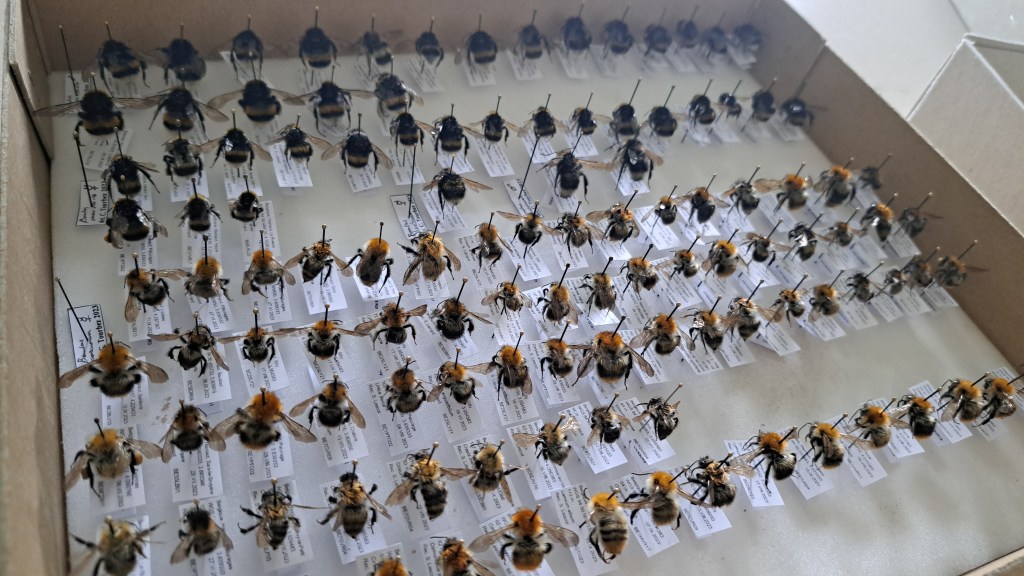
A 5-day training course focused on bee identification to species level involving laboratory work.
Course Overview
The intermediate Bee Taxonomy course is a 5-day training course which takes place in the laboratory. The course focuses on identification to species level of your region.
The aim of the course is to build a network of experts in all EU Member States who are able to accurately identify pollinator species, in order to support EU pollinator conservation efforts and the EU Biodiversity Strategy 2030.
This course is part of the EPIC-Bee training program led by UMONS in Belgium. The course will last 5 full days in the laboratory providing training on identifying at least 500 bee species. High flexibility will be given in the organisation of these courses as it will highly depend on the starting level of the trainees.
Who should attend?
Target audience: Individuals with background in bee identification at the genus level, and for some easy and common species.
Entry Level Requirements:
- Ability to differentiate bees from other insects.
- Ability to distinguish between male and female bees.
- Experience working with insect collections.
- Proficiency in using binoculars.
- Knowledge of how to use dichotomous keys.
- Experience identifying bees
- Ability to identify bee genera and some common species
Regional Focus: Regional courses will focus on the specific species in that region. Participants are strongly encouraged to register only for courses in their own region (regions are detailed on the previous page).
Learning objectives
By the end of the course, participants will be able to:
- Gain practical experience in identification to species level in the laboratory.
- Learn the relevant resources to identify bees to species level in their region
- Understand where one’s own limits are and learn to provide an identification only when it’s certain.
- Identify at least 70% of the species expected in their Member State or of the 500 regional species for countries with high species diversity.
Practical information
- Duration: 5 full days
- Maximum Participants: 15
- See table for other details for each course
To apply for the courses, enter in the Pollinator Academy: (LINK NOT AVAILABLE YET)
 epic-pollinators.com